
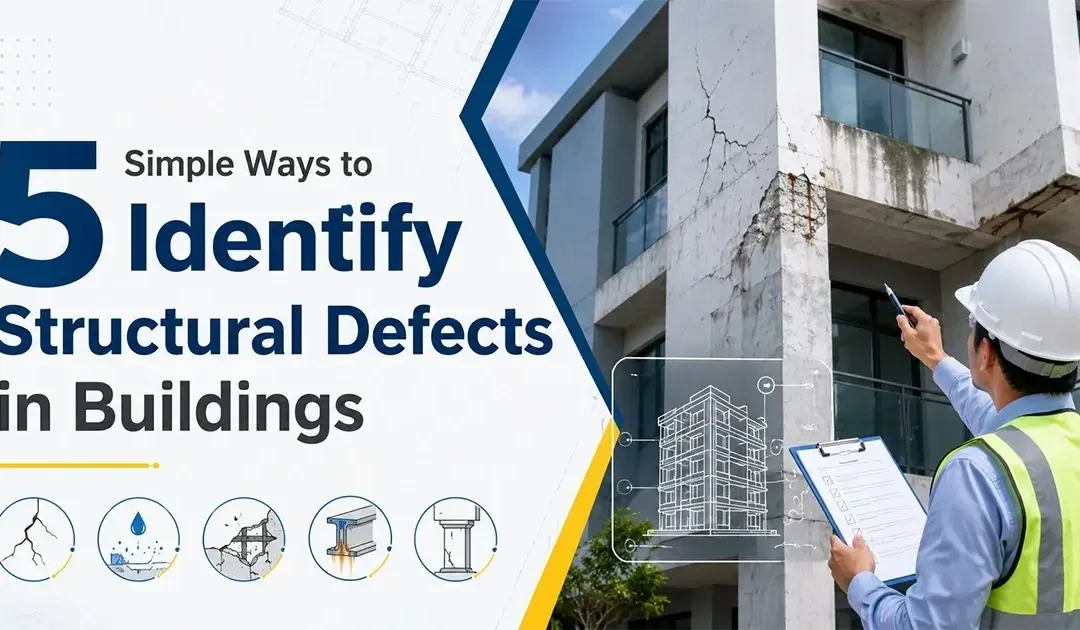
Buildings are built to handle years of environmental exposure, occupancy loads, and the slow natural wear and tear. But even a property that looks really well done can still start to act up over time, and new problems show up like they were always there. Some issues are mostly cosmetic, not too risky, but other defects can be a signal of deeper structural trouble. Structural defects in buildings can affect safety, durability, and the long-term value you expect from the place.
For homebuyers, investors, property managers, and developers, finding structural defects early in projects in Bangalore is kind of the whole game. Small warning signs, when you see them in time, can sometimes point to bigger hidden problems. And if those bigger problems stay unnoticed, the repair costs can grow, sometimes quickly.
In this blog, we’ll walk through five practical ways to spot likely defects. There are also common warning signs people overlook, and we’ll connect these issues back to how buildings perform and how they end up impacting investment worth.
See also: What Is Interior Design Cost in Bangalore?
Understanding Structural Defects in Buildings
Before examining inspection methods, it is important to grasp what counts as a structural defect.
Structural defects in buildings are basically faults or breakdowns that disturb the primary load-bearing parts of a structure, like foundations, columns, beams, slabs, walls and roofs. These kinds of issues can lower a building’s strength, its steadiness and also its day-to-day performance.
Common causes include:
- Poor design and engineering
- Inferior construction materials
- Inadequate workmanship
- Soil settlement
- Water infiltration
- Overloading of structural elements
- Environmental deterioration
- Lack of maintenance
Unlike surface defects like paint peeling, or a small plaster crack or two, structural issues can actually take their time worsening, and then create big building safety issues sooner or later.
See also: What Is Vastu for House Construction
Types of Structural Defects and Their Severity
| Defect Type | Severity Level | Potential Impact |
| Hairline plaster cracks | Low | Mostly cosmetic |
| Settlement cracks | Medium to High | Foundation movement |
| Beam and column cracks | High | Structural weakness |
| Slab deflection | High | Load-bearing concerns |
| Water-induced concrete deterioration | High | Reinforcement corrosion |
| Foundation settlement | Very High | Structural instability |
| Roof sagging | Very High | Risk of collapse |
Getting a feel for how serious the different Building Defects are helps property owners focus on inspections and repairs sooner, in a practical way.
Why Early Detection of Structural Defects Matters?
Catching structural defects in buildings early can really help property owners, from pricey repairs and safety headaches to that slow, quiet depreciation in property value. Even if some building problems seem small at the start, they can, little by little, turn into bigger structural troubles. The ones that mess with stability and, in the long run, the entire structure’s condition.
When things get noticed sooner, it usually helps with:
- Stopping small hitches from becoming major structural defects
- Lowering long-term upkeep costs and repair work
- Improving overall building performance and stretching its lifespan
- Reducing the chance of building safety issues showing up
- Protecting property value as well as marketability
- Backing compliance with safety rules and construction standards
Whether you’re buying a new place, investing in real estate, or dealing with a building that already exists, routine inspections are one of the most practical routes to find construction quality defects before they turn into severe structural damage.
See also: How to Buy a Flat in Bangalore: Complete Homebuyer Guide
5 Simple Ways to Identify Structural Defects in Buildings
Inspect Cracks in Walls, Columns, and Ceilings
One of the easiest ways to notice structural trouble is just by looking at visible crack patterns, right away.
But not every crack automatically means a structural failure. Still, some types of cracking should not be brushed off, because they often point to something deeper.
Cracks That Really Need Attention:
- Diagonal cracks
When diagonal cracks show up near windows, doors, or corners, they can hint at foundation settlement or other structural movement that’s not supposed to be happening.
- Stair-step cracks
These stair-step cracks usually run along mortar joints in masonry walls. They can mean differential settlement, which is basically parts of the building moving in different ways.
- Wide vertical cracks
If a crack is wider than 3 mm, it may be a sign of significant movement in load-bearing walls, and that’s usually worth getting checked.
- Cracks in columns and beams
Cracks that form right on columns, beams, or other structural supports are among the more severe warning signals. They may indicate load-related stress, and that can become serious if it continues.
- Ceiling cracks
Long, continuous cracks across a ceiling can suggest slab movement, excessive deflection, or reinforcement concerns.
- Quick Crack Assessment Guide
| Crack Width | Possible Concern |
| Less than 1 mm | Usually cosmetic |
| 1–3 mm | Monitor regularly |
| 3–5 mm | Professional inspection recommended |
| More than 5 mm | Immediate structural assessment required |
See also: What Is a Settlement Deed in Property and How Does It Work?
Check for Uneven Floors and Foundation Settlement
Foundation troubles are among the most costly major structural defects in buildings to repair, at least that’s how it feels when you find them too late.
Settlement usually shows up when the soil beneath the foundation shifts, squeezes, or slowly erodes, piece by piece.
Signs of Foundation Movement
- Sloping floors
- Uneven flooring levels
- Doors that fail to close properly
- Windows are becoming difficult to operate
- Gaps between walls and ceilings
- Separation between skirting boards and floors
Simple way to check
Put a marble or a small ball on various spots of the floor. If it keeps rolling in one direction, it could be a sign of uneven settlement.
A better evaluation is possible with laser level gear or by hiring a pro to do floor elevation surveys.
A defect people often miss
Most buyers look for obvious wall cracks, but they tend to overlook the subtle floor slant changes. In the early stage, foundation settlement is sometimes noticeable on the floors first, before the larger wall cracking ever starts to show up.
Look for Water Damage and Moisture Intrusion
Water is one of the major reasons for lasting Construction Quality Defects, really.
Even if a building is structurally sound, it can start to suffer serious troubles when water gets into concrete, masonry, or steel reinforcement.
Warning Signs
- Damp patches on walls
- Water stains on ceilings
- Mold growth
- Efflorescence (white powder deposits)
- Peeling paint
- Rust stains on concrete surfaces
Why Moisture Is Dangerous
When water penetrates reinforced concrete:
- Steel reinforcement begins to corrode.
- Rust expands.
- Concrete cracks and spalls.
- Structural capacity gradually reduces.
Commonly Overlooked Defect
A lot of property owners see recurring dampness as a waterproofing matter, but sometimes it’s more than that; it can point to hidden structural cracks letting water move in.
Examine Structural Members for Deflection and Deformation
Structural elements should stay in their original shape, and alignment.
Sometimes you notice bending. like sagging, or a kind of distortion and it usually means serious building safety problems, so this should not be brushed off or ignored.
Areas to Inspect
Beams
Look for:
- Excessive downward bending
- Visible cracks along beam length
- Separation between beam and wall connections
Slabs
Watch for:
- Noticeable sagging
- Ponding water on flat roofs
- Uneven ceiling surfaces
Roof Structures
Inspect for:
- Roofline irregularities
- Bowing rafters
- Depressed roof sections
Columns
Check for:
- Leaning
- Surface cracking
- Concrete spalling
Deflection Warning Indicators
| Structural Element | Potential Sign |
| Roof | Sagging ridge line |
| Slab | Water pooling |
| Beam | Visible bending |
| Column | Leaning or cracking |
Assess Concrete Condition and Reinforcement Exposure
Concrete deterioration usually happens little by little, and it stays unnoticed until those big repairs turn out to be unavoidable, you know.
Some signs that things are going downhill
Spalling concrete
Small bits of concrete start breaking away, so the rebar underneath gets exposed.
Exposed reinforcement
When you can clearly see the steel bars, it tends to mean serious deterioration, plus a reduction in the protective concrete cover.
Hollow-sounding spots
If you tap the concrete surface with a little hammer, some areas may sound hollow; this can come from delamination inside.
Rust staining
Rust colored streaks are often a clue that the reinforcement is corroding from the inside.
Why it actually matters:
Corrosion of reinforcement is, honestly, one of the most dangerous structural issues, because it changes how well the building carries load.
When Should You Hire a Structural Engineer?
While visual inspections help spot concerns, a more professional evaluation is needed when conditions actually shift, and the situation seems unclear.
- Cracks continue expanding
- Floors become noticeably uneven
- Structural members show deformation
- Foundation movement is suspected
- Reinforcement becomes exposed
- Water intrusion affects structural elements
Professional inspections may include:
- Structural audits
- Non-destructive testing (NDT)
- Core sampling
- Rebound hammer testing
- Ground penetration surveys
- Foundation assessments
Preventive Measures to Avoid Structural Problems
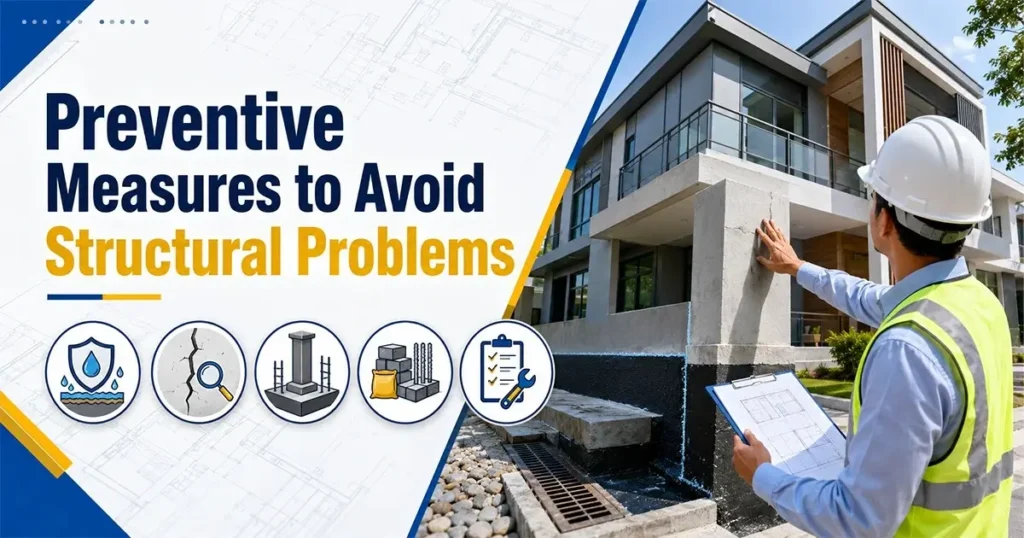
Preventive steps to sidestep structural troubles
It’s usually cheaper to stop defects early, rather than just wait, and then later have to come back to repair everything, you know.
Suggested habits:
- Do regular structural checkups
- Patch any water leaks right away, don’t put it off
- Keep the drainage systems in solid working order
- Don’t allow unauthorized structural changes, even if it looks small or kind of trivial
- Observe how the cracks evolve over time
- Make sure waterproofing care stays on the proper timeline
- Use licensed contractors for the repairs, because it really does count
- Follow the building upkeep calendar consistently
When you keep a steady watch, you can sometimes prevent minor construction quality defects from turning into costly structural failures.
See also: How to Tenant background screening for Rental Property: Best Practices for Landlords
Final Words:
Spotting building defects doesn’t always mean you need some advanced engineering brain. Sometimes it’s more like you look around, and those small clues are already there, like Visible cracks, uneven floors, moisture intrusion, structural change, and concrete that’s just plain deteriorating. They can show up early, and honestly, most of the time, they’re not trying to be subtle.
That said, a lot of serious issues stay hidden during routine property checks. Especially things such as foundation settlement, reinforcement corrosion, slab deflection, and concealed water- related damage. If you notice these warning signals earlier rather than later, you can help avoid really expensive fixes, keep safety standards on track, and protect the asset’s long-term value, too.
Whether you’re buying a home, reviewing an investment property, or managing a building that’s already in use, a proactive inspection approach is usually the best move. It helps you detect Building Defects, reduce Building Safety Issues, and keep structural integrity intact for years, even when the problems are not obvious at first.
FAQ’s
Structural defects are basically faults, or kind of weak spots, in the building’s load-carrying parts, foundations, columns, beams, slabs and structural walls, that’s where the stability comes from, so if they’re compromised, it can mess with safety overall, and the general performance too.
On a property, these defects usually show up for reasons like poor design, substandard materials, shaky workmanship, foundation settlement, water infiltration, environmental influences, overloading, and sometimes just plain neglect, or lack of maintenance, not keeping up with the building.
Some major structural defects people tend to mention are foundation settlement, severe cracking in beams or columns, roof sagging, slab deflection, structural wall displacement, reinforcement corrosion, and serious concrete deterioration.
You can reduce structural defects by using quality construction practices, getting the design right in the first place, doing regular inspections, installing effective drainage systems, and then doing timely maintenance. Also, if cracks or water leaks show up, you should address them quickly before they escalate, because they rarely “stay small” for long.
The most common construction quality defects include plaster cracks, concrete honeycombing, waterproofing failures, uneven flooring, dampness, reinforcement exposure, weak finishing, and inadequate concrete curing, which is kind of a big deal too.
When you’re buying a house, try to look at foundation cracks, uneven floors, doors and windows that stick, ceiling cracks, damp patches, any roof sagging, exposed reinforcement, and signs that the structure has been shifting, moving around, or settling unevenly.
If you break it down, the four main types of structural defects are foundation defects, concrete defects, masonry defects, and structural frame defects, which involve beams, columns, and slabs, more or less.
Structural building defects can often be spotted by inspecting crack patterns, checking floor levels, looking for deformation in structural members, finding moisture intrusion, and assessing how the concrete and reinforcement are holding up over time.
Sometimes structural defects can be repaired, but the cost really depends on how bad they are. Like minor issues, those might be relatively affordable, but if you’re stabilizing a foundation or doing major structural rehabilitation, then it turns into a pretty substantial investment, not some tiny little job
Structural defects can bring down property value because they nudge repair expenses higher, raise safety worries, limit financing possibilities, make buyers think twice, and just generally make the place harder to sell, even if the location is still decent.